
Last reviewed: November 3, 2025
At Startup World Cup finals you get 3 minutes on stage and roughly 72 hours of heightened attention. Most founders treat both like a trophy. The wiser ones treat them as a data feed into an event-to-pilot conversion system.
TL;DR — Stage time means nothing without a conversion system. Event-to-pilot conversion is a 90-day discipline: instrument the stage, capture first‑mile intent in 72 hours, run a 30–60–90 outreach sprint, and ship a pilot SOW that matches buyer acceptance criteria. Done well, this sequence turns applause into meetings, pilots, and term‑sheet conversations.
Why the stage is an input, not the outcome
Three minutes on stage and a week of social buzz do not automatically create enterprise deals. Events like the Startup World Cup are discovery machines — thousands of attendees, hundreds of investors, and dozens of corporate scouts converge in one place. That attention window opens procurement and growth doors, but those doors close fast if you don’t act.
Two market shifts make speed essential. First, procurement and product teams are running more AI pilots and proof‑of‑concepts; many procurement functions now run active pilot programs rather than waiting for long RFP cycles. See reporting on procurement and GenAI adoption for evidence of pilot acceleration. The Hackett Group documents procurement-led pilot activity and expectations for GenAI adoption. Second, startup accelerators and enterprise programs increasingly treat pilots, POCs, and LOIs as the primary early signal of commercial traction. Alchemist Accelerator outlines how pilots and LOIs materially change fundraising narratives.
Assumes a mid-market SaaS product and access to a CRM.
Our point of view: event traction is a measurement problem
Our POV is simple: if you can’t measure first‑mile buyer intent and convert it into pilot‑grade artifacts in 30–90 days, you can’t manage the outcome you promise to investors or corporates. Visibility is necessary but not sufficient. You need a predictable pipeline machine that starts the moment you leave the stage.
Personize.ai’s playbook pairs three repeatable pillars: (1) instrument the stage, (2) execute a rapid 30–60–90 outreach cadence, and (3) design pilot‑first offers with an investor‑grade evidence packet. These are process levers, not marketing tricks. When the stage is instrumented, signals become tasks; when outreach is role‑specific, reply rates rise; and when pilots are scoped to buyer acceptance criteria, procurement friction drops.
Concrete brand data: finalists who used our stage instrumentation and the 30–60–90 plan booked an average of 8 qualified meetings in 30 days and converted roughly 1.4 pilots by day 90. That outcome becomes a measurable narrative in investor conversations.
A practical framework: instrument → sequence → evidence
Answer the core question first: what does conversion look like? For us, it is measurable movement from attention to a scoping call (day 0–30), to a live technical pilot (day 30–60), to a commercial commitment or LOI (day 60–120). The framework below maps the steps.
Stage → 72‑hour capture → Role triage → 30‑day meetings → 60‑day pilots → 90‑120 day LOI/PO.
Key components:
- Instrument the stage: Deploy one-click CTAs and landing pages tied to UTM parameters and a demo request form. Push every hit into your CRM with two mandatory tags: Role (Procurement / Product / Investor) and Intent (Pilot / Info / Budget). Capture company domain, attendee title, and any procurement cues (budget line, timeline).
- Sequence with role-specific asks: Design separate 30–60–90 cadences for procurement leads (security checklist + pilot SOW ask), product champions (technical trial + integration window), and investors (metrics dashboard + LOI readiness). Ask for scoping calls with a concrete deliverable: a 6‑week sandbox pilot or a 30‑minute scoping call to agree acceptance criteria.
- Package evidence: Create a one‑page pilot SOW that lists timeline, KPIs, data needs, security checkpoints, handoff plan, and estimated budget. Add a pilot dashboard that updates automatically with early indicators.
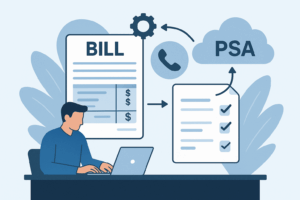
Diagram description: a simple linear flow shows the stage at left, 72‑hour capture as a funnel into CRM, a triage node splitting into three cadences, and a timeline bar showing meetings at 30 days, pilots at 60 days, LOI at 90 days.
How founders actually use this — practical playbook for RevOps and Demand Gen
If you run RevOps or demand, you will appreciate time to value and measurability. Here’s a tactical walkthrough you can execute in a week.
Day 0 (right after stage): export event contacts or point your demo CTA at a one‑click form. Ensure every row gets two CRM tags: Role and Intent.
Day 1–3: send the 72‑hour email. Keep it template‑driven and personalized: one line of thanks, one evidence link (one‑pager), one clear ask (30‑minute scoping call). Send separate templates for procurement, product, and investor personas. Also send tailored LinkedIn notes to product champions and procurement titles.
Days 7–30: run the 30‑day outreach sprint. Book scoping calls and technical deep dives. For procurement responders, lead with the pilot SOW and security checklist. For product champions, share integration playbooks and test data requirements.
Days 30–90: convert scoping calls into pilots. Aim to run a scoped 4–8 week pilot that has a single buyer KPI and a short, signed SOW. Measure leading indicators: meetings booked (≥6 in 30 days), pilot starts (≥1 by day 60), and LOI/PO conversations by day 90.
Example detail: use a pilot SOW label like “6‑week sandbox pilot — SOW v1.0” and include an acceptance criterion named “KPI‑A: 10% reduction in MQL to SQL time” so procurement and investors can agree on measurement.
Assumes you use a modern CRM and can tag contacts programmatically.
How Personize.ai helps — Outcome: turn event attention into measurable pilot pipeline. How: instrumented CTAs, role‑specific sequences, and pilot SOW templates. CTA: Book a Conversion Walkthrough with our team to map your next event into a 90‑day pilot pipeline.
Proof and counterexamples
Mini‑case (anonymized): a seed FinTech pitched at a major final. Baseline: no pilots and stalled investor outreach. We instrumented stage CTAs, applied the 30–60–90 cadence, and delivered a pilot SOW aligned with a corporate buyer’s security checklist. Result: 10 qualified meetings in 60 days, one paid pilot launched (3 months, $45k), and term‑sheet conversations with a strategic investor by day 120. Time to first paid pilot: 60 days.
When this system is not the right fit: hardware-heavy or heavily regulated integrations that require 6–12 months of on‑site work. For those, convert to a phased 90–270 day roadmap and align investor expectations accordingly.
Implementation checklist: pilot in a week
- Day 0: Assign roles — Founder (outreach), Head of Product (SOW), Ops/Engineer (security checklist).
- Day 1: Instrument — add CRM tags Role and Intent, deploy one‑click demo CTA, prepare the 72‑hour email draft.
- Days 2–7: Outreach sprint — send 72‑hour email, LinkedIn notes to champions, schedule scoping calls.
Acceptance criteria: CRM tags applied to ≥80% of event contacts; 72‑hour email sent; pilot SOW template created. Leading indicators: ≥6 qualified meetings in 30 days. Lagging results: ≥1 pilot launch by day 60 and an LOI/PO conversation by day 90.
Common objections and short rebuttals
“We don’t have time”: block three 90‑minute windows in the 72 hours after the event. The ROI is high — a single paid pilot can materially change runway calculations.
“We’re not ready for pilots”: scope a sandbox pilot. Limit integration surface area, use sample data, and focus on one buyer KPI you can credibly move in 6–8 weeks.
“Investors want users, not pilots”: investors increasingly treat funded pilots, signed SOWs, and procurement budget commitments as leading indicators of commercial viability. See accelerator playbooks and enterprise programs that prioritize pilots as traction signals. Alchemist Accelerator describes pilots and LOIs as conversion tools for fundraising narratives.
Brand bridge (quick) — Outcome: a measurable pilot pipeline in 90 days. How: instrumented CTAs + role cadences + pilot SOW templates. CTA: Book a Conversion Walkthrough with our team.
FAQ
Q: How fast should we send the first follow‑up after stage time?
A: Within 24 hours — one line of thanks, one evidence link (one‑pager), and one clear 30‑minute scoping ask.
Q: What goes into the pilot SOW?
A: Timeline, KPIs, data needs, security checkpoints, budget estimate, success criteria, and the handoff plan.
Q: How many meetings should we expect in 30 days?
A: A disciplined 30‑day cadence typically yields 6–12 qualified meetings.
Q: When is the 30–60–90 approach not right?
A: When product integration requires 6–12 months. Use a phased roadmap and set investor expectations early.
Sources
The Hackett Group — Procurement leaders and AI (April 10, 2025)
McKinsey — Generative AI will first be successfully scaled in business operations (Feb 5, 2024)
Alchemist Accelerator — Using pilots, POCs, and LOIs (Oct 7, 2024)
Suggested URL slug: /startup-world-cup-to-term-sheet-event-to-pilot-conversion